Powder, polish, qualify, repeat.

Additive Manufacturing Weekly

Today's Edition

Sandvik’s exit from AM frames a week of qualification, quality data and production-focused process control.

TUESDAY, JUNE 2, 2026
TCT Magazine

Sandvik Exits Additive Manufacturing Business

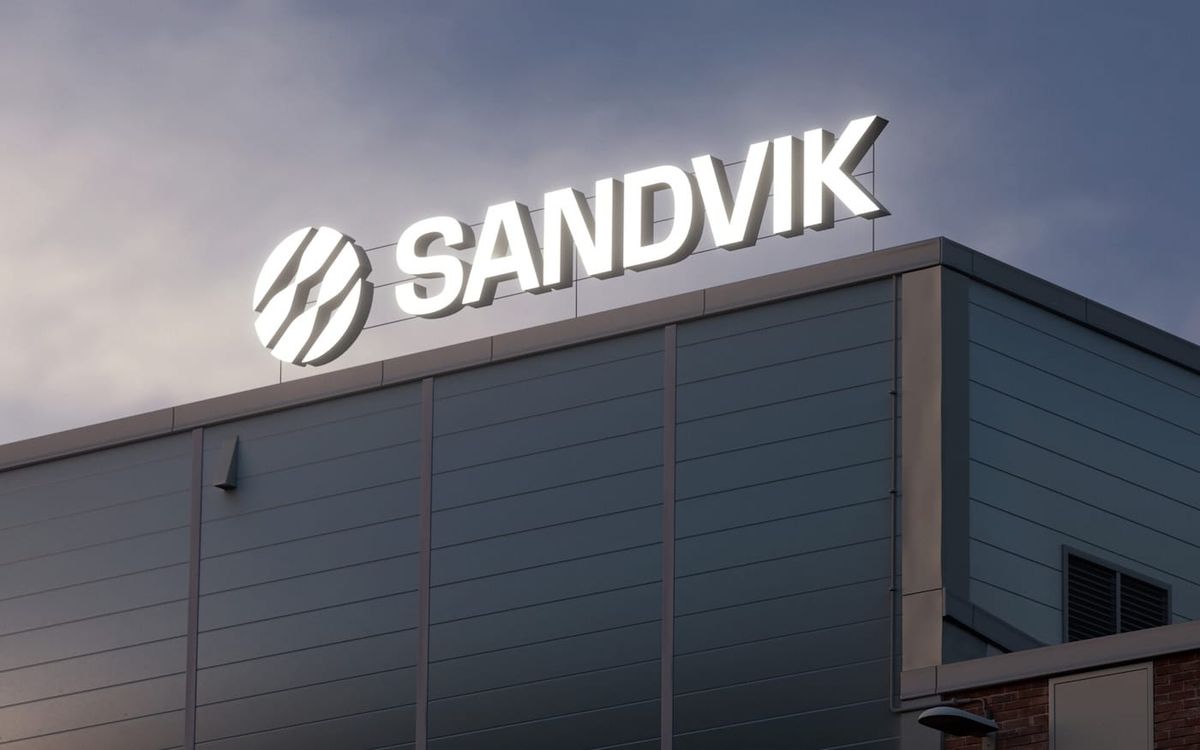
Sandvik has moved to exit its additive manufacturing business, signing an agreement to sell the unit to Swedish investment firm Mimir. The decision is one of the clearest signs this year that industrial AM is entering a more selective phase, where large engineering groups are reassessing whether they should own the full AM stack or concentrate on core manufacturing platforms.

The divested business sits within Sandvik’s Machining segment and includes metal powders for additive manufacturing, metal injection moulding, hot isostatic pressing and controlled expansion alloys. Sandvik has been active in AM for more than two decades, but the company has also been revising its exposure to the sector, including earlier changes to its service-provider holdings and a sharpened focus on metal powders.

For the broader AM market, the move is less a rejection of the technology than a statement about capital allocation. Powder production, qualification, customer-specific development and post-processing all require focused investment, while industrial customers increasingly demand certified, repeatable, production-ready systems rather than isolated technology demonstrations.

Mimir’s ownership may give the business a more dedicated platform for growth. At the same time, the sale underlines a wider truth for AM: growth is continuing, but the winners are likely to be companies that can connect materials, process control, qualification and surface finishing into a coherent production chain.

TCT Magazine

Mastrex Introduces MX300 Metal LPBF System

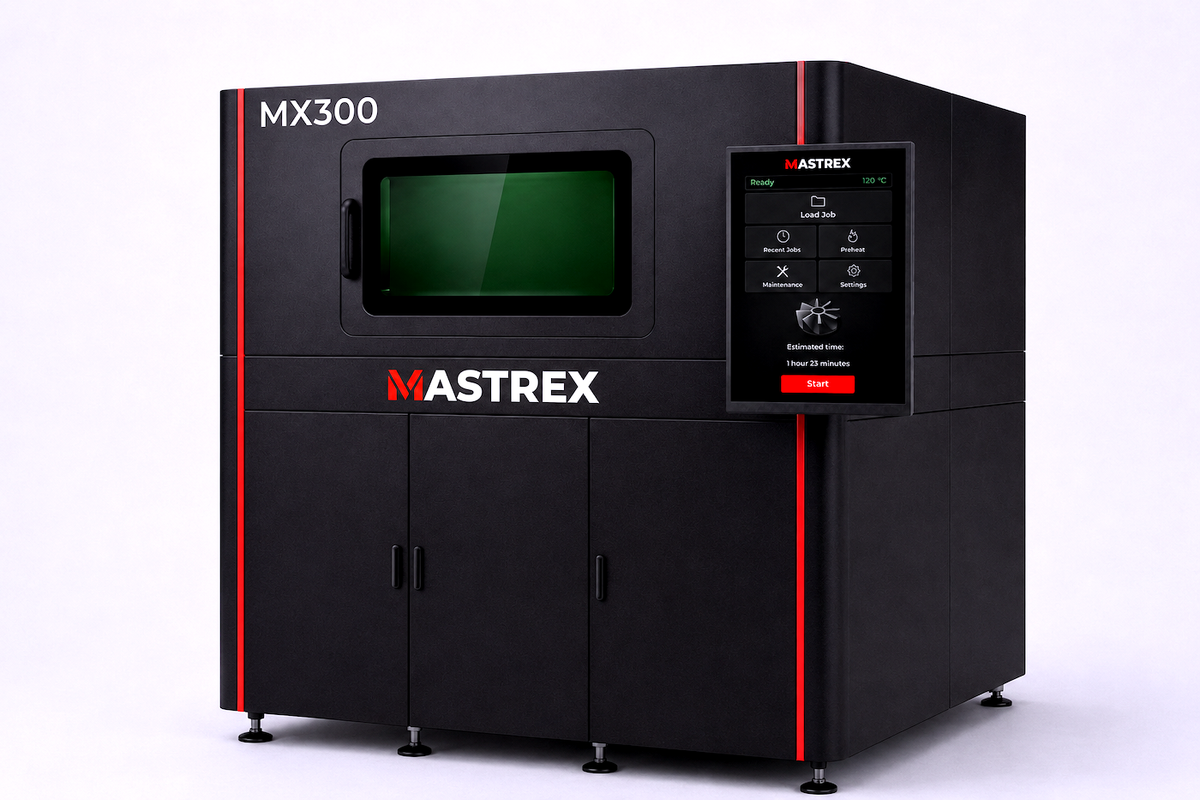
Mastrex has launched the MX300 metal system, a dual-500 W laser platform with a 300 × 300 × 350 mm build volume and a starting price of $185,000. The company is targeting machine shops, vertically integrated manufacturers and applications in aerospace, defence and medical markets.

TCT Magazine

Metal Powder Works and Westinghouse Scale Powder Project

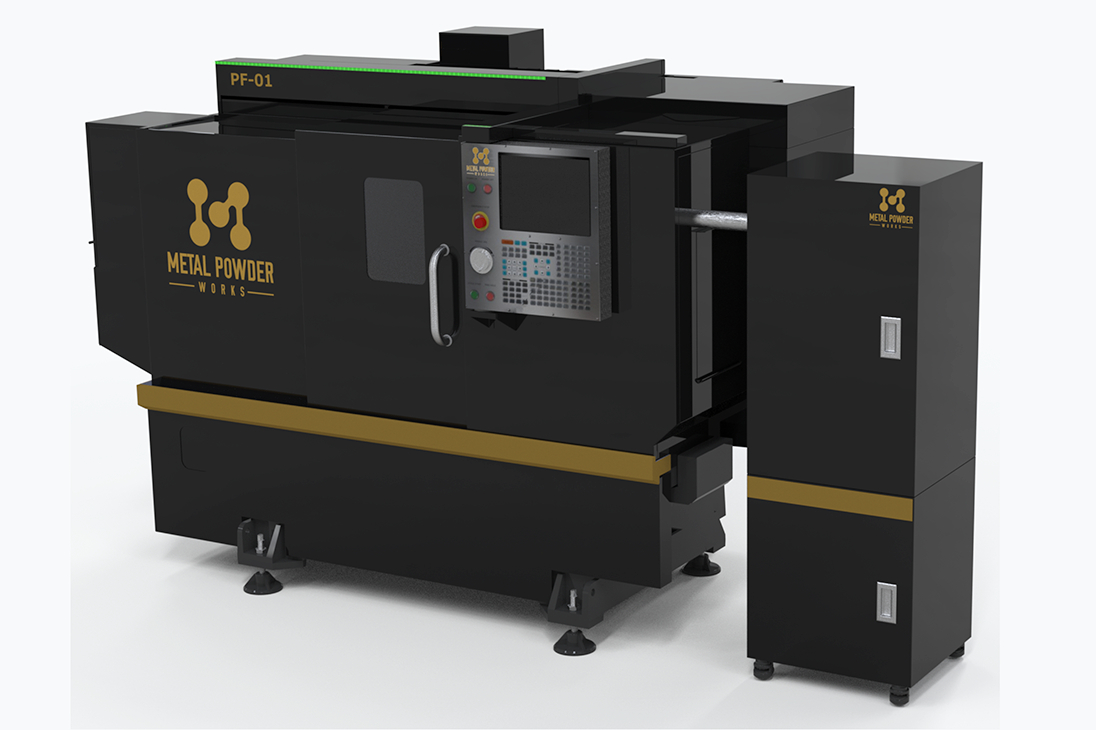
Metal Powder Works and Westinghouse Electric Company have moved into a new phase of product development around AM powder production. The work uses MPW’s DirectPowder process to convert bar stock into feedstock for AM, cold spray and powder metallurgy, with nuclear energy components named as a target application.

News Briefs

3D Spark Certifies Its AM Software Security

TCT Magazine

3D Spark has achieved ISO/IEC 27001:2022 certification, a signal that enterprise AM software is being judged not only on costing and workflow features, but also on information-security discipline.

Custom Medical Devices Move Beyond Craft Work

3D Printing Industry

Invent Medical’s orthotics and prosthetics work shows how scan-to-print workflows can shift clinics from fabrication-heavy routines toward patient-specific digital care.

Biofabrication Pushes Preclinical Testing Forward

3D Printing Industry

Newcastle University’s biofabrication approach highlights how AM is being used to make more relevant testing platforms before clinical translation.

LMM Metal AM Targets Clinical-Grade Parts

3D Printing Industry

Lithography-based metal manufacturing is being positioned for medical production, where detail, repeatability and regulatory documentation all matter.

Digital Twins Shape Healthcare Customization

3D Printing Industry

Healthcare AM is increasingly being paired with digital-body data, giving clinicians a route to mass customization without treating each device as a manual one-off.

Kiprun Enters Printed Footwear Race

3D Printing Industry

Decathlon’s Kiprun brand has launched a 3D printed shoe, adding another major sportswear name to the lattice-midsole and performance-footwear trend.

Bambu Lab Expands A-Series Format

TCT Magazine

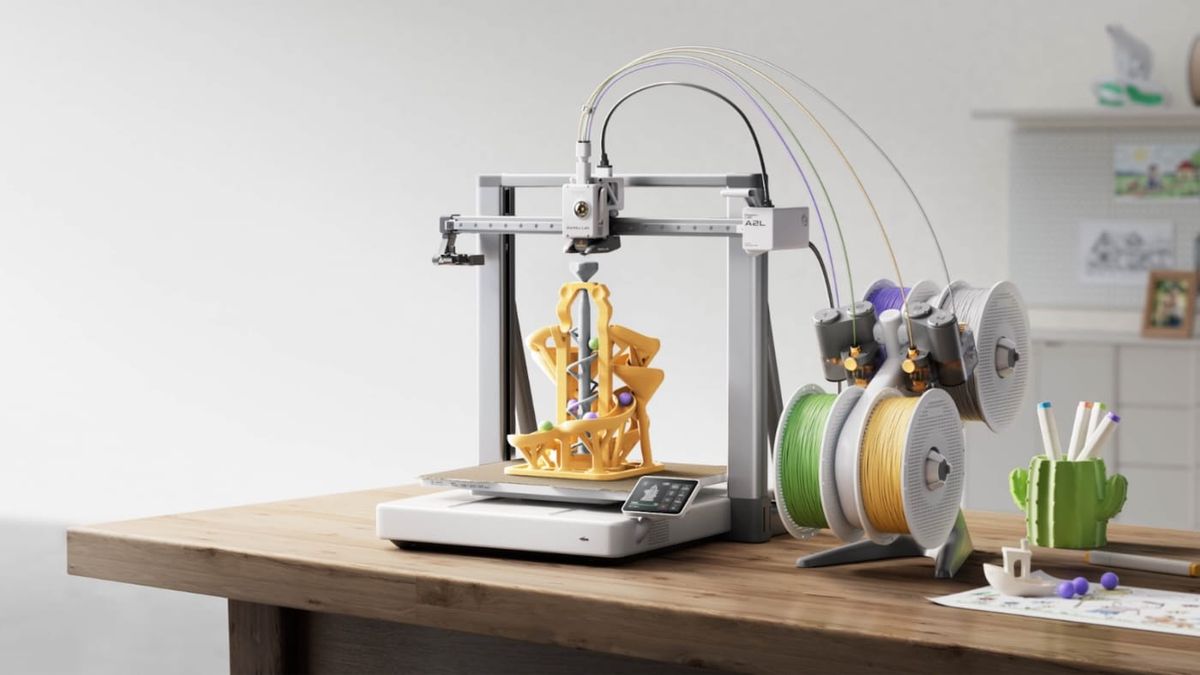
The A2L’s larger format targets creators and print farms that want single-piece production of larger props, household parts and creative objects.

Quality Management Moves Into Semiconductor AM

VoxelMatters

The amsight-toolcraft collaboration underlines how AM suppliers are building data infrastructure for demanding sectors where traceability is non-negotiable.

Fun Corner — From the Front Page of r/AdditiveManufacturing & r/3Dprinting & r/functionalprint

Stratasys to Acquire Markforged

r/AdditiveManufacturing · discussion upvotes

The community is reacting to consolidation moves and what they mean for industrial AM hardware portfolios.

Can You Polish 3D Printed Metal?

r/3Dprinting · discussion upvotes

A surface-finishing question turns into a practical thread about what metal AM can look like after sanding and polishing.

PLA Post-processing Techniques

r/3Dprinting · discussion upvotes

A classic finishing thread compares sanding, filler, primer and patient iteration for cleaner polymer prints.

Reason 1002 to Have a 3D Printer

r/functionalprint · discussion upvotes

The functional-print crowd keeps making the case that useful little fixes are still the most persuasive AM demos.

3D Scanning and 3D Printing Go Together

r/functionalprint · discussion upvotes

A practical reminder that capture, modelling and printing are increasingly part of one repair-and-replace workflow.

First Functional Print From My Own Model

r/functionalprint · discussion upvotes

The celebration is small, but the lesson is big: CAD ownership turns printing from consumption into manufacturing.

Research Spotlight

Philipp Gabriel, Florian Eibl, Stephan Barcikowski, Anna Rosa Ziefuss — Additive Manufacturing

This paper targets one of the most important frontiers in metal AM: seeing not just geometry or melt-pool intensity, but chemical information during the build. Robust in-situ spectroscopy and reconstruction could help move LPBF process monitoring closer to material-level quality assurance.

Journal Watch

Layer-to-layer closed-loop switched heating and cooling control of the laser powder bed fusion process

Additive Manufacturing
Barış Kavas, Efe C. Balta, Lars Witte, Michael R. Tucker, Markus Bambach

A closed-loop strategy for LPBF thermal control points to tighter layer-by-layer process stability.

3D printing of mesoscopic porous anodes to enhance gas transport in solid oxide fuel cells

Additive Manufacturing
Jinsi Yuan, Mingfeng Wu, Shixiang Yu, Jing Shao, Jiaming Bai

Mesoscopic porosity is used as a design lever to improve gas transport in additively manufactured fuel-cell components.

Defect-Free DLP Additive Manufacturing of Complex Ti64 Components by Non-Reactive Diluent Assisted Debinding

Additive Manufacturing
Huiling Wang, Juncheng Lu, Jinsi Yuan, Zhaohui Zhang, Jiaming Bai

The work addresses debinding as a route to more reliable DLP production of complex titanium alloy parts.

Substepped and advected subdomain methods for part-scale LPBF modeling

Additive Manufacturing
Mehdi Slimani, Michele Chiumenti, Miguel Cervera

The modelling approach aims to make part-scale LPBF simulation more computationally manageable.

Toward Real-Time Chemical Mapping during Laser Powder Bed Fusion: Robust In-Situ Spectroscopy and 3D Reconstruction

Additive Manufacturing
Philipp Gabriel, Florian Eibl, Stephan Barcikowski, Anna Rosa Ziefuss

In-situ spectroscopy is used to move LPBF monitoring toward chemical and spatial reconstruction.

Agentic additive manufacturing alloy evaluation

Additive Manufacturing Letters
Peter Pak, Achuth Chandrasekhar, Amir Barati Farimani

Agentic AI is applied to alloy evaluation, suggesting faster exploration of AM-ready materials.

Predicting porosity in laser powder bed fusion of metals (PBF-LB/M) using scanning data and machine learning

Additive Manufacturing Letters
Jesus Rivas, Cesar Terrazas, Hugo Estrada, Francisco Medina, James P. Carney

The review connects scan data and machine learning to one of LPBF’s most persistent quality problems: porosity.

Multi-camera fault detection in fused filament fabrication printing

Additive Manufacturing Letters
Shanthalakshmi Kilambi, Aster Tournoy, Muhamad Amani, Jovana Jovanova, Kunal Masania

Multiple cameras are used to improve visual fault detection in extrusion-based printing.

Multi-nozzle molten metal droplet jetting

Additive Manufacturing Letters
Irtaza Razvi, Kareem Tawil, Chris Chunbin, David Trauernicht, Denis Cormier

The study explores multi-nozzle metal droplet jetting as a higher-throughput metal AM route.

Cold spray additively manufactured pure iron for magnetic applications

Additive Manufacturing Letters
Abhinav Anand, Ondřej Kovářík, Pavel Ctibor, Zahra Arabgol, Jan Cizek

Cold spray AM is evaluated for pure iron magnetic applications, extending the process beyond repair and coating use cases.

Adaptive-binder-aggregate mixing (ABAM): Concept for extrusion-based multi-material 3D concrete printing

Additive Manufacturing Letters
Christian Maximilian Hechtl, Maximilian Dahlenburg, Freek Bos, Thomas Kränkel, Christoph Gehlen

ABAM proposes a route to multi-material 3D concrete printing through adaptive mixing of binder and aggregate streams.

A Buckingham-Pi dimensionless analysis for melt pool stability and defect prediction in additive manufacturing

Additive Manufacturing Letters
Mahdi Alishavandi, Rahmi Ünal, Metin U. Salamci

A dimensionless framework is used to connect melt-pool stability with defect prediction across process conditions.